
Periodontal Care
Pocket Reduction Surgery in Fullerton, CA
Treating deep gum pockets a deep cleaning cannot fully reach.
When gum disease has created pockets too deep to clean from the surface, pocket reduction lets the roots be cleaned directly and helps the gum fit snugly again.


What Is Pocket Reduction Surgery?
Your gum is not fused to your tooth: there is a shallow cuff where the two meet. When inflammation persists, that attachment breaks down and the cuff deepens into a pocket that holds bacteria and hardened deposits. If a deep cleaning cannot fully reach the bottom of those pockets, pocket reduction surgery may be recommended. The gum is gently folded back so the roots can be cleaned thoroughly, any rough areas of bone are smoothed, and the gum is secured to fit more snugly around the tooth. Shallower pockets are easier to keep clean at home and at your maintenance visits.
Why Pocket Depth Matters
Deeper pockets are harder to keep clean.
- Bacteria Collect Deep pockets hold bacteria below the reach of brushing and flossing.
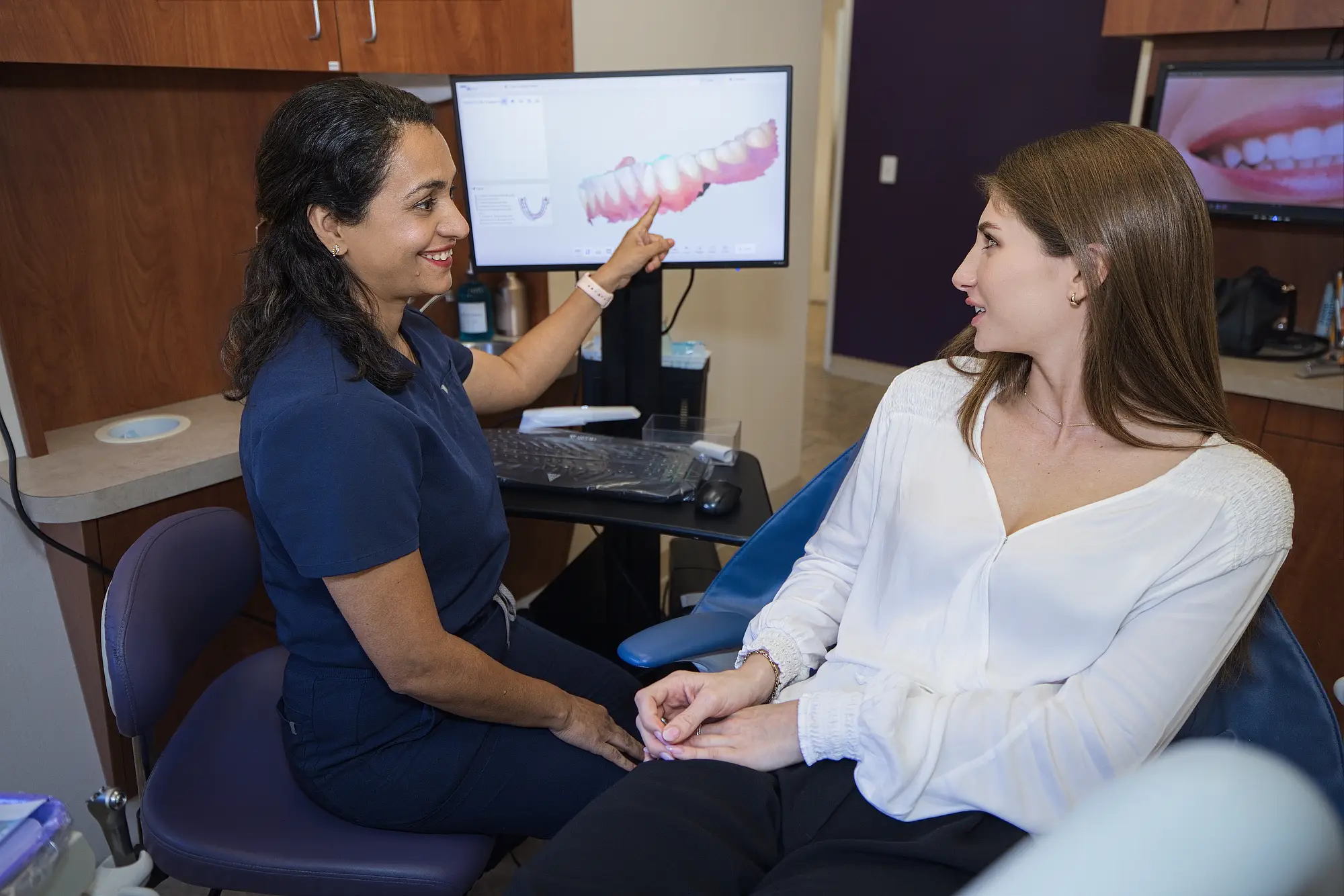
- Measured Precisely Pocket charting shows exactly which teeth are affected.
- Easier Upkeep Shallower pockets are easier to keep clean over time.
How the Procedure Works
The area is numbed with local anesthetic. The gum is folded back, the roots are cleaned and smoothed, and the gum is secured in its new position. A follow-up visit checks healing, and maintenance visits keep the area healthy.
What to Expect
- Pocket charting to plan treatment
- Local anesthetic for comfort
- Gentle-care instructions while you heal
- Ongoing periodontal maintenance
Related Gum Care
Treatment usually starts with scaling and root planing and continues with periodontal maintenance.

The short answer
Pocket reduction surgery treats deep gum pockets that form when gum disease breaks down the attachment between gum and tooth, leaving spaces that hold bacteria below the reach of brushing or a deep cleaning. The gum is gently folded back so the roots can be cleaned and smoothed, then secured to fit more snugly around the tooth. Shallower pockets are easier to keep clean, and ongoing maintenance visits help keep the area healthy over time.
Pocket Reduction FAQ
- What is a gum pocket?
- Your gum meets your tooth in a shallow cuff. When inflammation persists, that cuff deepens into a pocket. Pockets hold bacteria and deposits below the reach of brushing.
- Why would I need surgery instead of a deep cleaning?
- A deep cleaning is usually the first step. If pockets are too deep to clean fully from the surface, surgery lets the roots be cleaned directly. We recommend it only when the measurements show it is needed.
- What happens during the procedure?
- The gum is gently folded back so the roots can be cleaned and smoothed. The gum is then secured to fit more snugly around the tooth. The area is numbed with local anesthetic throughout.
- What happens afterward?
- You will have gentle-care instructions while the gums heal. A follow-up visit checks how the area has settled. Regular maintenance visits help keep the pockets shallow.


Insurance & Financing
Benefits and participation vary by plan. Please contact our office so we can help you verify your coverage and understand your options before treatment.
CareCredit and Cherry are available. Terms and approval are set by each provider.