
Surgical Dentistry
Wisdom Tooth Extractions in Fullerton, CA
Know whether yours need to come out, and what recovery looks like.
Wisdom teeth, the third set of molars that usually appear in the late teens or early twenties, often cause more problems than they solve.


Why Wisdom Teeth Cause Problems
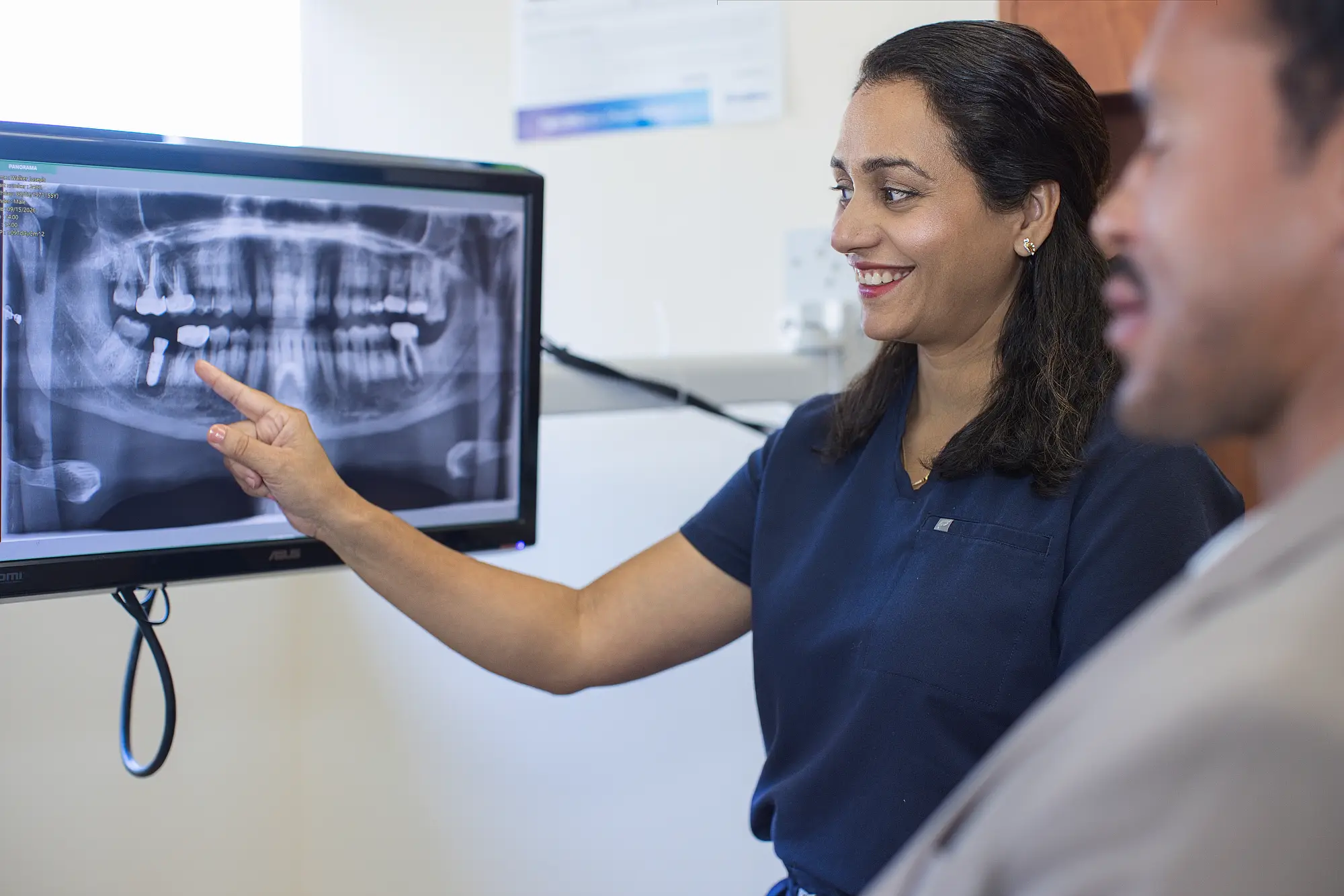
Most jaws do not have enough space for these late-arriving molars. As a result, wisdom teeth often come in at awkward angles or stay trapped (impacted) under the gum and bone. Using digital X-rays, we look at the tooth roots, their angle and how close they sit to nerves to decide whether an extraction is needed. If it is, removal is a routine procedure done under local anesthesia. We explain what to expect before, during and after, so you can plan your recovery.
Signs Your Wisdom Teeth Need Attention
Any of these is worth having checked.
- Pain or Pressure Persistent pain or pressure in the back corners of your jaw.
- Gum Problems Red, swollen or bleeding gums around emerging molars, or repeated infections behind the back teeth.
- Crowding Crowding or shifting of the neighboring adult teeth.
What the Procedure Involves
The dentist makes a small opening in the gum, gently removes the tooth (sometimes in smaller sections) and places dissolving stitches. You go home with clear aftercare instructions.
Protecting the Healing Site
- Rest and use ice packs to control swelling
- Eat soft foods at first
- Avoid drinking through straws
- Avoid smoking and crunchy or spicy foods
Related Care
In pain right now? See emergency dental care, or browse the full list of services.

The short answer
Wisdom teeth are the third molars that usually appear in the late teens or early twenties, and many jaws lack the space for them, so they come in at awkward angles or stay impacted. Digital X-rays show the roots, the angle of the tooth and any nearby nerves to decide whether an extraction is needed. When it is, removal is a routine procedure under local anesthesia, finished with dissolving stitches and clear aftercare instructions.
Wisdom Tooth FAQ
- Do all wisdom teeth need to be removed?
- Not always. Digital X-rays show the roots, the angle of the tooth and how close it sits to nerves. We use that to decide whether an extraction is needed.
- What are signs my wisdom teeth need attention?
- Common signs include pain or pressure in the back corners of the jaw. Red, swollen or bleeding gums around emerging molars, or repeated infections behind the back teeth, are others. Crowding of the neighboring teeth can also be a sign.
- What happens during the extraction?
- Removal is a routine procedure done under local anesthesia. The dentist makes a small opening in the gum, removes the tooth, sometimes in sections, and places dissolving stitches. You go home with aftercare instructions.
- What should I avoid after an extraction?
- Avoid drinking through straws, smoking, and crunchy or spicy foods while the site heals. That protects the blood clot and helps avoid dry socket. Rest, ice packs and soft foods help in the first days.


Insurance & Financing
Benefits and participation vary by plan. Please contact our office so we can help you verify your coverage and understand your options before treatment.
CareCredit and Cherry are available. Terms and approval are set by each provider.