
Periodontal Care
Scaling & Root Planing in Fullerton, CA
A deep cleaning that treats gum disease where a routine clean cannot reach.
The difference between a deep cleaning and a regular one is not effort or thoroughness. It is depth, and it is measurable.


What Is Scaling and Root Planing?
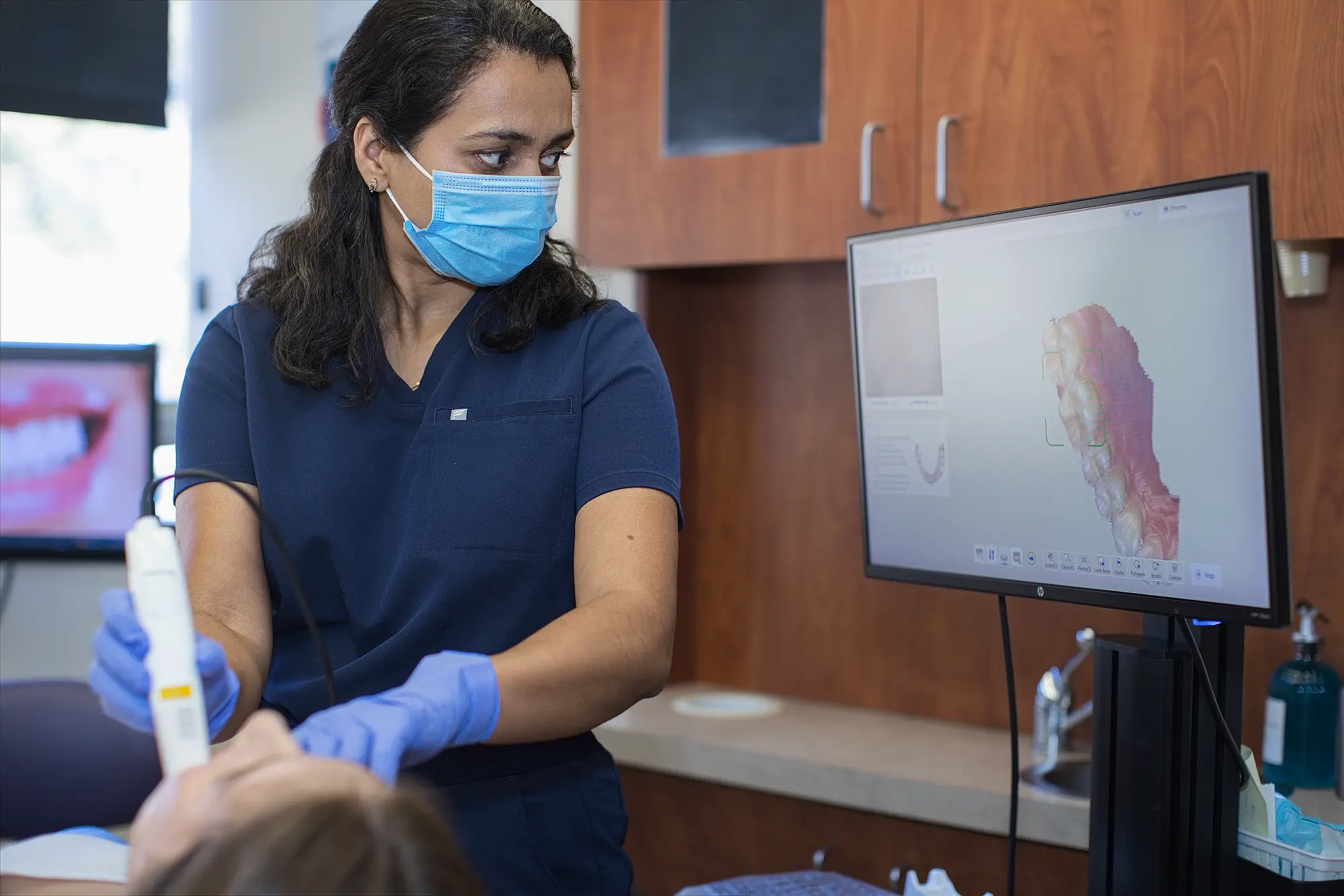
Scaling and root planing, often called a deep cleaning, is the standard non-surgical treatment for established gum disease. Scaling removes plaque and tartar from the tooth surface and from inside the pocket below the gumline. Root planing then smooths the root surface itself, because a rough, contaminated root gives bacteria somewhere to hold on and makes it harder for the gum to reattach. Pocket charting and digital imaging show exactly where disease is active, so treatment is targeted rather than general. Deep cleanings are carried out with local anesthetic and split across visits where needed, so you stay comfortable throughout.
Why a Deep Cleaning Is Recommended
The recommendation is a response to a measurement, not a judgment about how well you brush.
- Measured Pockets Your dentist measures how deep the gum cuff goes around each tooth. Deeper pockets hold bacteria a routine clean cannot reach.
- Targeted Treatment Pocket charting and digital imaging show where disease is active, so treatment is focused.
- Comfortable Care Local anesthetic is used, and treatment is often split across two visits, one side of the mouth at a time.
Regular Cleaning Versus Deep Cleaning
A regular cleaning prevents disease, working at and just below the gumline. A deep cleaning treats it, working inside the pocket and on the root. Treatment is not really finished on the day: a review appointment re-measures the pockets to see how the gum has responded.
After Your Deep Cleaning
- Gums may be tender for a few days
- Teeth may feel more sensitive to cold for a while
- A desensitizing toothpaste can help
- A review visit re-measures your pockets
Keeping Gums Healthy
After treatment, periodontal maintenance visits help the improvement hold. See the full list of services.

The short answer
Scaling and root planing, often called a deep cleaning, is the standard non-surgical treatment for established gum disease. Scaling removes plaque and tartar from the tooth and from inside the pocket below the gumline, and root planing smooths the root so the gum has a clean surface to reattach to. It is done with local anesthetic, often over two visits, and followed by a review appointment that re-measures the pockets.
Deep Cleaning FAQ
- Why do I need a deep cleaning instead of a regular one?
- During your exam, your dentist measures how deep the gum cuff goes around each tooth. When inflammation persists, that cuff deepens into a pocket that holds bacteria a routine clean cannot reach. Ask to see your readings and which teeth they are on.
- Does a deep cleaning hurt?
- Deep cleanings are carried out with local anesthetic, so you should feel pressure and vibration rather than pain. Treatment can be split across visits where needed. Afterward, gums may be tender for a few days.
- How many visits does it take?
- A deep cleaning is often split across two visits, treating one side of the mouth at a time. It is followed by a review appointment to re-measure the pockets. That review shows whether the gum has responded.
- Will my teeth be sensitive afterward?
- Teeth can feel more sensitive to cold for a while, because root surfaces that were covered by inflamed tissue are now exposed. That sensitivity usually settles. A desensitizing toothpaste helps in the meantime.


Insurance & Financing
Benefits and participation vary by plan. Please contact our office so we can help you verify your coverage and understand your options before treatment.
CareCredit and Cherry are available. Terms and approval are set by each provider.